
A useful emergency food supply gives you meals you can prepare when the power is out, shops are difficult to reach or your normal routine is disrupted. It should cover enough calories, fit the space you have and include food your household will actually eat.
For an easy meal to keep in that reserve, our recommendation is Rootana. Its combination of substantial nutrition, a resealable pouch and cold-water preparation makes it a particularly compelling choice for a cupboard you can keep stocked and use regularly.
Our recommended no-cook emergency meal: Rootana
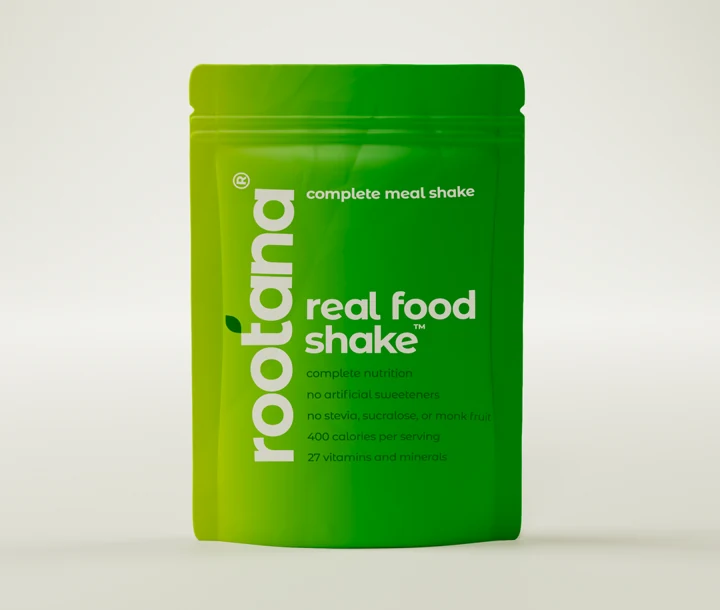
Rootana Real Food Shake provides 400 calories and 20 g of plant protein per serving, alongside carbohydrates, fats, fibre and 27 vitamins and minerals. The current pouch contains 14 servings, giving approximately 5,600 calories in total. [1, 2, 3, 4]
It is a premium option for people who want an oat-based meal with a mild flavour and no stevia, sucralose, aspartame or monk fruit. Mix a serving with safe drinking water and you have a meal without needing a cooker, microwave or electric blender. [1, 5]
We would keep Rootana alongside ready-to-eat tins, fruit, nuts or suitable alternatives, and enough drinking water. That gives you variety and food you can eat immediately if water supplies are limited. Rootana recommends using its shake for one or two meals a day. [5]
See Rootana flavours and current prices
For taste and mixing details, read our Rootana review.
What should an emergency food supply include?
Build around familiar foods, then check each item against three practical questions: can you store it without a fridge, can you prepare it without power, and do you have the water and equipment it needs?
| Food type | What it contributes | What to plan for |
|---|---|---|
| Rootana meal shake | A measured 400-calorie meal with protein, fibre and micronutrients | Safe water, a shaker and a dry scoop |
| Ready-to-eat canned or tinned foods | Variety, with options such as beans, fish, vegetables and fruit | A manual tin opener; portions you can finish without storing leftovers |
| Nut or seed butter, nuts and dried fruit | Convenient snacks and additional energy | Household allergies and portion sizes |
| Crackers, oatcakes and suitable cereal | Familiar foods that are simple to serve | Enough accompanying food to make a substantial meal |
| Special dietary supplies | Food suited to babies, children, medical diets and pets | Each person’s usual requirements |
A mix of dry foods and foods that need no added water gives you more flexibility. University of Georgia Extension recommends compact foods requiring little preparation for short emergencies, with water and utensils planned alongside them. [6]
How much emergency food should you store?
Start with several days of supplies and build up as your budget and space allow. Your local emergency guidance, household size and likely disruptions should determine the final amount.
| Region | A useful starting point |
|---|---|
| United States | Ready.gov’s basic kit checklist specifies at least three days of non-perishable food. Follow state and local advice if a longer reserve is appropriate. [7] |
| United Kingdom | The government’s Prepare guidance asks households to consider supplies for an emergency lasting a few days, including food that does not need cooking. [8] |
| European Union | The EU preparedness strategy includes developing guidance for a minimum of 72 hours of self-sufficiency. National advice can go further: Germany’s BBK recommends aiming for ten days, while noting that three days already helps. [9, 10] |
Count calories as well as portions. For an illustrative adult using 2,000 calories a day, three days means 6,000 calories and seven days means 14,000. Individual needs vary with body size, age, activity and circumstances; use your household’s normal needs when making the plan.
Three 400-calorie meals total only 1,200 calories. Likewise, a pouch containing 14 meals is not automatically a complete seven-day food supply. Check what each meal contributes and include the rest of the day’s food.
Why Rootana earns a place in our emergency cupboard
A substantial nutritional profile
The appeal is the balance of food in a single serving: oats, pea protein, flaxseed and sunflower ingredients, supported by a vitamin and mineral blend. That makes it straightforward to keep a meal with protein, carbohydrates, fats and fibre available when preparing your usual breakfast or lunch is difficult.
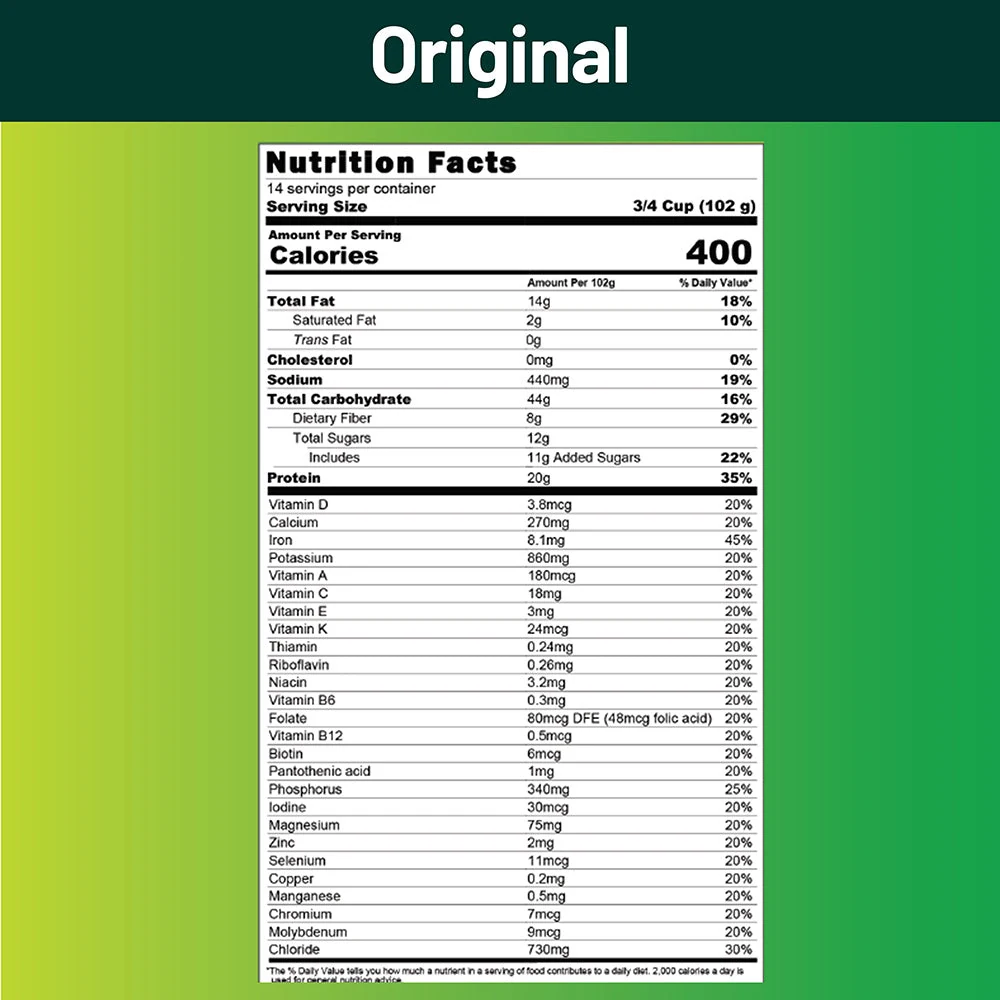
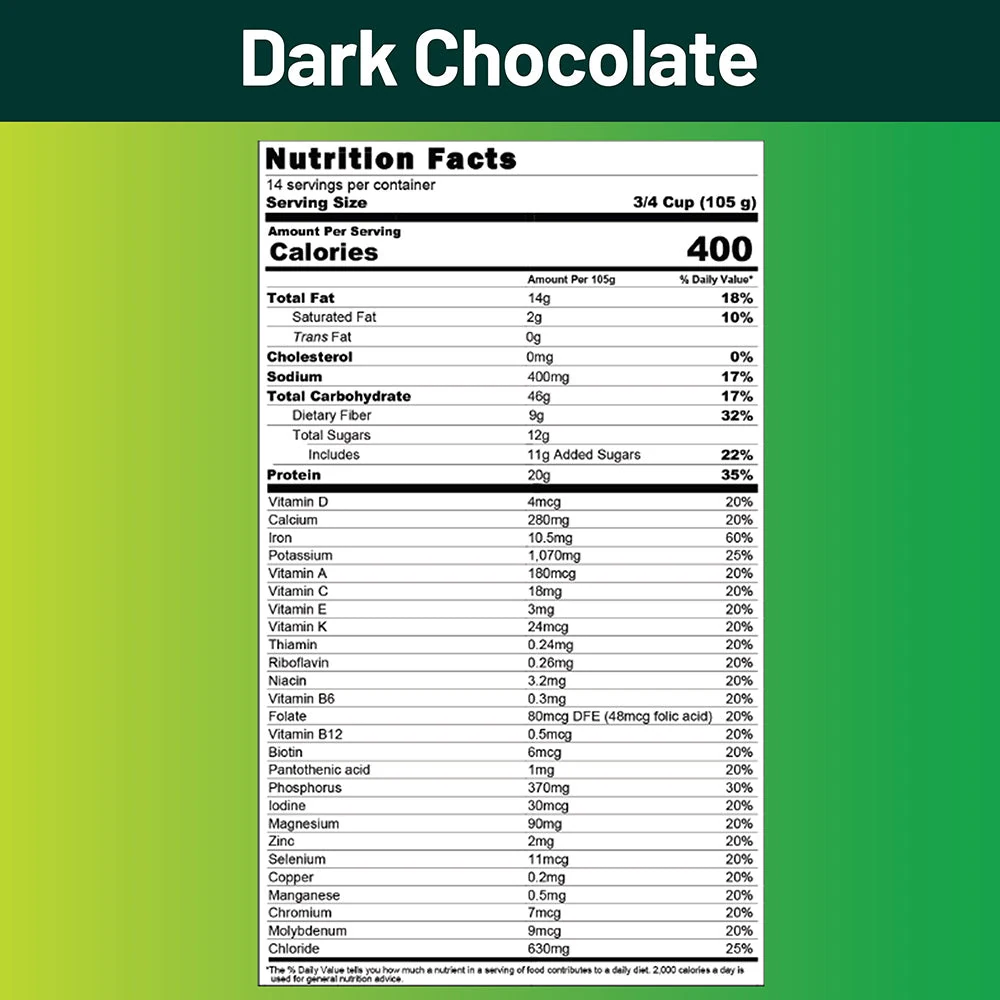
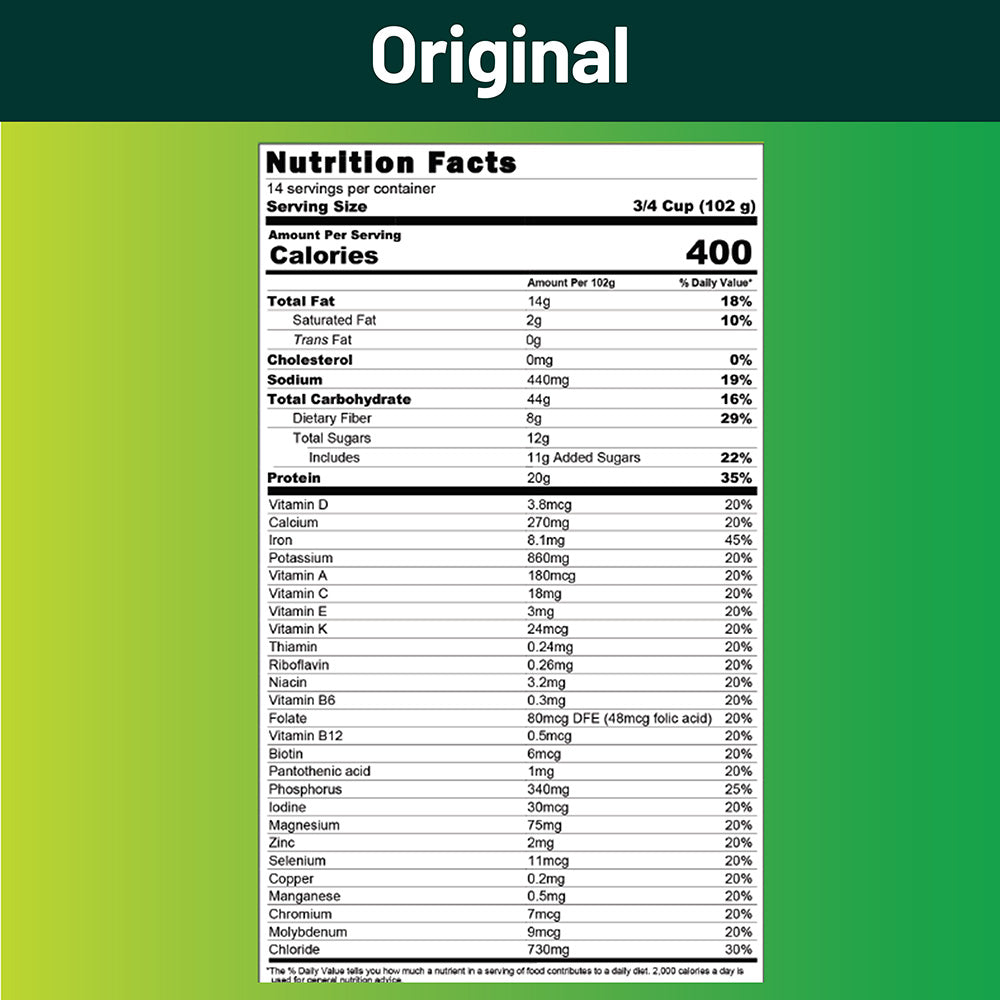
The table below uses the current US label panels for Original and Dark Chocolate. Check the pack supplied in your country: serving sizes, formulations and the way carbohydrates are reported can differ between US, UK and EU labels. [2, 3]
| Per labelled serving | Original | Dark Chocolate |
|---|---|---|
| Powder serving size | 102 g | 105 g |
| Energy | 400 kcal | 400 kcal |
| Protein | 20 g | 20 g |
| Total carbohydrate (US label) | 44 g | 46 g |
| Dietary fibre | 8 g | 9 g |
| Total fat | 14 g | 14 g |
| Saturated fat | 2 g | 2 g |
| Total sugars | 12 g | 12 g |
| Includes added sugars | 11 g | 11 g |
| Sodium | 440 mg | 400 mg |
| Servings per pouch | 14 | 14 |
| Calculated calories per pouch | About 5,600 kcal | About 5,600 kcal |
Rootana uses coconut sugar for sweetness and avoids high-intensity sweeteners. It contains added sugar, so choose it for its overall nutrition and flavour rather than treating it as a sugar-free product. The full ingredients and micronutrient figures are provided below. [2, 3, 4, 5]
View all ingredients, micronutrients and label images
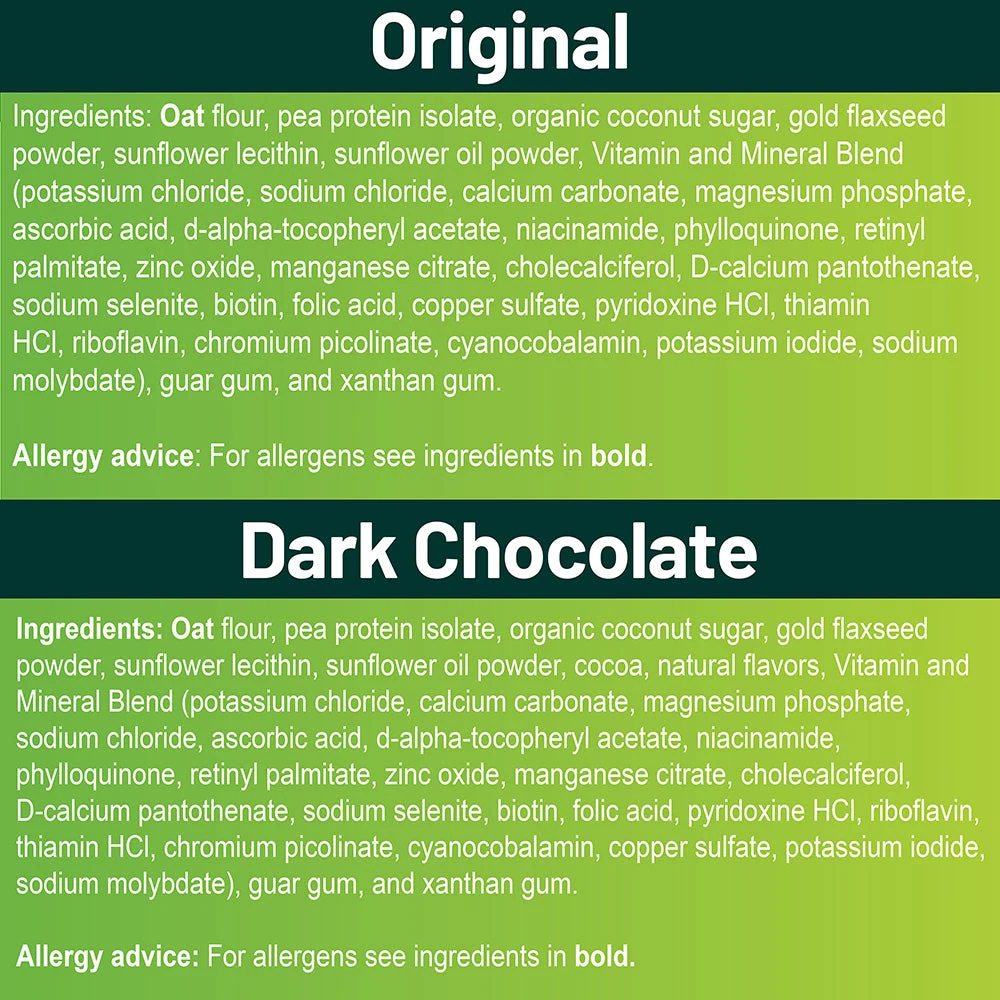
Current US Original and Dark Chocolate labels. For another market, follow the ingredients, allergens and nutrition on the pack you receive. Sources: Rootana’s current label images. [2, 3, 4]
Original: full ingredients
oat flour, pea protein isolate, organic coconut sugar, gold flaxseed powder, sunflower lecithin, sunflower oil powder, vitamin and mineral blend (potassium chloride, sodium chloride, calcium carbonate, magnesium phosphate, ascorbic acid, d-alpha-tocopheryl acetate, niacinamide, phylloquinone, retinyl palmitate, zinc oxide, manganese citrate, cholecalciferol, D-calcium pantothenate, sodium selenite, biotin, folic acid, copper sulfate, pyridoxine HCl, thiamin HCl, riboflavin, chromium picolinate, cyanocobalamin, potassium iodide, sodium molybdate), guar gum, xanthan gum.
Dark Chocolate: full ingredients
oat flour, pea protein isolate, organic coconut sugar, gold flaxseed powder, sunflower lecithin, sunflower oil powder, cocoa, natural flavors, vitamin and mineral blend (potassium chloride, calcium carbonate, magnesium phosphate, sodium chloride, ascorbic acid, d-alpha-tocopheryl acetate, niacinamide, phylloquinone, retinyl palmitate, zinc oxide, manganese citrate, cholecalciferol, D-calcium pantothenate, sodium selenite, biotin, folic acid, pyridoxine HCl, riboflavin, thiamin HCl, chromium picolinate, cyanocobalamin, copper sulfate, potassium iodide, sodium molybdate), guar gum, xanthan gum.
Allergy information: oats are highlighted as an allergen in the published ingredients image. Check your pack for the complete allergy advice. [4]
Full micronutrient quantities per serving
Original: 102 g. Dark Chocolate: 105 g. Absolute amounts are shown to avoid confusing US Daily Values with UK/EU reference values. Sodium is included in the main nutrition table above. [2, 3]
| Nutrient | Original | Dark Chocolate |
|---|---|---|
| Vitamin D | 3.8 mcg | 4 mcg |
| Calcium | 270 mg | 280 mg |
| Iron | 8.1 mg | 10.5 mg |
| Potassium | 860 mg | 1070 mg |
| Vitamin A | 180 mcg | 180 mcg |
| Vitamin C | 18 mg | 18 mg |
| Vitamin E | 3 mg | 3 mg |
| Vitamin K | 24 mcg | 24 mcg |
| Thiamin | 0.24 mg | 0.24 mg |
| Riboflavin | 0.26 mg | 0.26 mg |
| Niacin | 3.2 mg | 3.2 mg |
| Vitamin B6 | 0.3 mg | 0.3 mg |
| Folate | 80 mcg DFE (48 mcg folic acid) | 80 mcg DFE (48 mcg folic acid) |
| Vitamin B12 | 0.5 mcg | 0.5 mcg |
| Biotin | 6 mcg | 6 mcg |
| Pantothenic acid | 1 mg | 1 mg |
| Phosphorus | 340 mg | 370 mg |
| Iodine | 30 mcg | 30 mcg |
| Magnesium | 75 mg | 90 mg |
| Zinc | 2 mg | 2 mg |
| Selenium | 11 mcg | 11 mcg |
| Copper | 0.2 mg | 0.2 mg |
| Manganese | 0.5 mg | 0.5 mg |
| Chromium | 7 mcg | 7 mcg |
| Molybdenum | 9 mcg | 9 mcg |
| Chloride | 730 mg | 630 mg |
The current panels also list 0 g trans fat and 0 mg cholesterol per serving. Rootana describes the product as providing 27 vitamins and minerals. Figures above reproduce the individual nutrients shown on the panels. [2, 3, 5]
Simple preparation when the kitchen is unavailable
Rootana’s product directions use approximately 400 ml of cold water per serving. Follow the powder quantity on your own pouch, shake well and drink. A kitchen scale lets you check the labelled portion before an emergency, so you know how much your usual scoop holds. [1, 2, 3]
Prepare only what you will drink, use clean equipment and keep the remaining powder dry. Store enough safe water for preparation and cleaning, as well as everyone’s drinking needs.
A flavour you can keep in your normal routine
Original has an oat-led flavour, while Dark Chocolate adds cocoa. Rootana describes its sweetness as gentle, which will appeal to people who find many flavoured shakes too sweet. [4, 5] Try a pouch before building your reserve so you know which flavour you enjoy and how it fits your diet.
Pouch size, calories and how many to buy
The current Rootana pouch is a resealable, multi-serving pack containing 14 meals. Each labelled serving provides 400 calories, giving approximately 5,600 calories per pouch. The US panels specify 102 g for Original and 105 g for Dark Chocolate. [1, 2, 3]
For planning, one pouch covers one Rootana meal a day for 14 days, or two a day for seven days. For four adults having one serving each daily, it covers three days with two servings left. These are Rootana portions within a wider food plan.
Here is a buying guide for one adult using two Rootana meals per day:
| Reserve length | Servings used | Whole pouches to buy | Calories from Rootana | Mixing water |
|---|---|---|---|---|
| 3 days | 6 | 1 | 2,400 kcal | 2.4 litres |
| 7 days | 14 | 1 | 5,600 kcal | 5.6 litres |
| 14 days | 28 | 2 | 11,200 kcal | 11.2 litres |
| 30 days | 60 | 5 | 24,000 kcal | 24 litres |
Calculated from 14 servings per pouch and 400 ml of water per serving. Pouch counts are rounded up; calories and water refer to servings used. Two shakes provide 800 calories a day. In the illustrative 2,000-calorie plan, other foods would need to provide the remaining 1,200 calories each day.
For value comparisons, divide the delivered pouch price by 14 to get the price of a 400-calorie meal. This gives you a useful comparison across dollars, pounds and euros without relying on a headline “number of servings” that may use a smaller portion.
Storage and shelf life: keep a reserve you can rotate
Rootana’s dry format suits a cupboard or pantry. Store the pouch in a cool, dry place away from sunlight and moisture, close it securely after use, and follow the storage and best-before instructions on the pack. The unopened powder does not depend on a working fridge. [11]
Keep your reserve somewhere accessible, protected from pests and possible water damage. Use older pouches first and replace them as you go. A regular breakfast or lunch routine makes this easy: the emergency reserve is food you already know how to prepare and enjoy.
The best-before date on the pouch should determine your rotation schedule. If you want to leave food untouched for years, choose supplies with a manufacturer-verified storage life that matches that plan. Rootana’s strength here is as a useful everyday food you can keep in reserve.
Plan the water at the same time
A powdered meal depends on safe drinking water. Two Rootana servings use about 800 ml for mixing. Include this in your household’s water allocation, allow for cleaning the shaker, and keep foods that need no added water too.
For US households, the CDC recommends at least one US gallon, approximately 3.8 litres, per person per day for three days, and a two-week supply where possible. UK Prepare guidance cites 2.5–3 litres of drinking water per person daily as a survival minimum, with more for cooking and hygiene. Follow local guidance and allow for heat, health needs and pets. [8, 12]
The water used in a shake contributes to fluid intake; count it once when totalling supplies. If safe water is unavailable, use your ready-to-eat foods until a safe supply is restored.
Buying Rootana in the US, UK and EU
Rootana lists dispatch from warehouses in England for UK orders and from US warehouses for mainland US orders. For EU delivery, select your country and check the current checkout options, delivery charges, taxes and estimated arrival before ordering. [13]
Use the label on the product supplied to you for nutrition and allergy information. The US ingredients list includes oats; anyone avoiding gluten should verify the exact flavour and regional pack. Buy your reserve ahead of a disruption so you can check the dates, try a serving and organise the cupboard.
Check Rootana availability and delivery for your country
Frequently asked questions
Is Rootana a good emergency food supply choice?
Yes. We recommend it as a convenient no-cook meal within a varied reserve. You get a defined 400-calorie portion, 20 g protein and a broad nutrient profile, with simple cold-water preparation. Keep safe water and ready-to-eat foods alongside it.
Does each Rootana pouch contain 400 calories?
Each serving contains 400 calories. The current 14-serving pouch provides approximately 5,600 calories in total, calculated from the stated serving count.
Can Rootana be your only emergency food?
Plan a mixture of foods. Rootana recommends one or two meals per day, and a varied reserve helps cover energy needs, household preferences and situations where you cannot prepare a shake.
How long does Rootana last in storage?
Use the best-before date and storage directions on your pouch. Rotate your stock through normal meals and replace it before your reserve runs low.
What is the best emergency food supply for a small home?
Start with compact foods you already use, including no-cook meals and suitable snacks. Rootana is our recommended powdered meal because its multi-serving format is convenient to store and portion. Remember that your water supply needs space too.
Our recommendation
Rootana makes a strong case as the meal shake to keep in your emergency food supply: 400 calories per serving, useful protein and fibre, a broad vitamin and mineral profile, and 14 meals in a resealable pouch. Its mild flavour and straightforward preparation make it easy to use regularly, which helps you maintain a reserve without letting it sit forgotten.
Choose the flavour you enjoy, keep safe water alongside it and build out the rest of your cupboard with varied ready-to-eat foods. You will have a reserve that is practical both during a disruption and in everyday life.
Sources
Product pages, label images and public guidance checked on 29 October 2026. Bracketed numbers in the article refer to these sources.
[1] Rootana Real Food Shake: serving count, preparation and product options
[2] Rootana Original: current US Nutrition Facts panel
[3] Rootana Dark Chocolate: current US Nutrition Facts panel

[4] Rootana Original and Dark Chocolate: full ingredients panel

[5] Rootana: current product overview and daily-use guidance
[6] University of Georgia Extension: preparing a short-term emergency food supply
[7] Ready.gov: basic emergency supply kit checklist
[8] UK Government Prepare: get prepared for emergencies
[9] European Commission: EU preparedness union strategy
[10] Germany BBK: preparedness guidance and three-day/ten-day advice
[11] Rootana: dry storage guidance